
Keystoned Steel // Field Guide
Lower Allegheny River
GAUGE — USGS 03049807
01 — Section
PITTSBURGH HOME WATER · KEYSTONED STEEL FREE GUIDE
02 — Section
THE LOWER ALLEGHENY RIVER GUIDE
The free anchor of the Lower Allegheny Pack LIVING EDITION — keystonedsteel.pages.dev/free-allegheny/
HOW THIS GUIDE LIVES: The Lower Allegheny is a living guide — the live edition is served on the Keystoned Steel site and updates as the water changes. This app edition is current as of Nov 14, 2026. The live pages for the whole pack: Lower Allegheny River Guide — keystonedsteel.pages.dev/app/guides/lower-allegheny-river/ · Deer Creek Deep Dive — keystonedsteel.pages.dev/app/guides/deer-creek-deep-dive/ · Pine Creek Deep Dive — keystonedsteel.pages.dev/app/guides/pine-creek-deep-dive/. No membership — guides never expire, and updates to the guides you bought are free.
03 — Section
THE RIVER
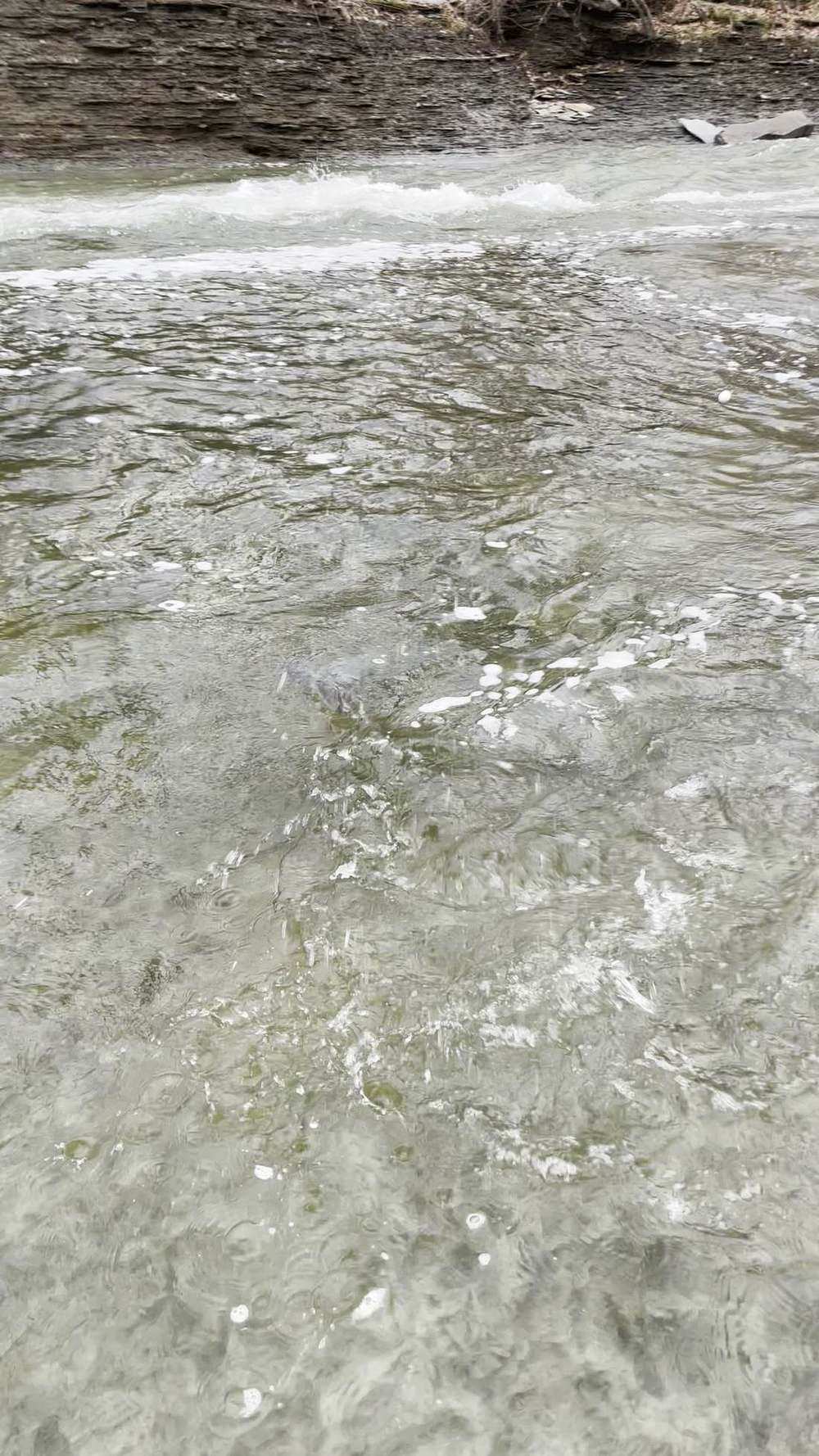
The Lower Allegheny is Pittsburgh's home river — the run of Allegheny River water below the last lock-and-dam pools down to the Point, where it meets the Monongahela to form the Ohio. It is big, working river water: dam releases, barge traffic and lock schedules move it more than rain does, and the fishing turns on reading those releases the way an Erie angler reads a gauge after a storm.
04 — Section
HOW TO READ IT
Start every trip with the live conditions habit: check the current flow and the dam release pattern before you drive. Rising water after a release pushes fish to the soft edges and the creek mouths; falling water pulls them back to the deeper slots and the structure along the banks. If the river is blown out and climbing, fish the mouths of the tributaries instead — that is exactly what the rest of this pack is for.
05 — Section
THE TRIBUTARY MOUTHS — WHERE THIS PACK PAYS OFF
The Lower Allegheny's feeder creeks are the home-water play when the big river is off. Three of them carry their own full living guides in this pack:
06 — Section
PINE CREEK — ETNA / GLENSHAW
Prime-window reads off the real Etna gauge (USGS 03049807): GO at 45–110 cfs, WAIT below 45 or at 110–250, NO-GO over 250. The Glenshaw delayed-harvest (DHALO) access is the heart of it, with hatch charts in the full Pine Creek Deep Dive.
07 — Section
DEER CREEK — GIBSONIA / HARMAR
The Interactive Edition — the daily go / no-go call, field intel and dated updates on the 1.9-mile Gibsonia DHALO. Deer Creek is read off the Pine Creek at Etna gauge, labeled as a proxy. Field note: construction north of the hole has silted it in and muddied the creek below — still unfixed as of this edition.
08 — Section
THE KISKIMINETAS RIVER
The Kiski is the Allegheny's biggest tributary, joining from the east — its own full living guide rides in this pack, with the same gauge-first approach: read the water before you drive.
09 — Access
ACCESS & PARKING — THE HONEST RULE
Fish only where access is public or posted open, and park only where parking is legal. River access on the Lower Allegheny changes with construction, postings and water level — the living edition on the site carries the current state, so check it before you go rather than trusting any printed page, including this one.
10 — Access
NIGHT FISHING — WORKING THE HOLES AFTER DARK
The lower Allegheny is a night river as much as a day one. The walleye that sulk in the deep dam tailwaters all day slide up onto the current seams and rock edges at dark, and the channel catfish in the deep holes off the tributary mouths feed hardest in the first hours of the night. Smallmouth stay active through dusk on the rock piles and bridge shadows. Work it slow and close: the fish are not chasing at night, they are set up on the seams where the current delivers food, and a bait or jig crawled along those edges is the game.
Tonight's pick: a live shiner — on the bottom in the deep holes off the mouths, or under a float along the seam below the dam — is the Allegheny's standing night pattern and never leaves the picks on this water. Jig-and-minnow fished slow is the artificial match. Carry a headlamp with a red setting, know your exit path before dark, and stay clear of the lock and dam restricted zones — the locks run on their own schedule at night, and the water below a dam is no place to be surprised.
11 — Section
FORAGE & ECOLOGY NOTES — THE ALLEGHENY SYSTEM
The Allegheny is a different food web from the lake shore — a river web, built for smallmouth, walleye and musky. Crayfish are the engine: abundant in the rocky runs, active all warm season, and the single most important food in the river. Sculpins hold the riffle cobble. Hellgrammites — the big dobsonfly larvae under the riffle rocks of the Northern Allegheny — are a classic river bait where the regulations allow, and, like everything else on this page, a clean-water animal. Shiners and river minnows school in the pools and eddies — and a live shiner on a bobber at a creek mouth or eddy edge is the standing go-to on this water and never fully leaves the picks. There is no lake-run egg cycle here; the drift is insects, crayfish and minnows, spring through fall.
The hellbender. The eastern hellbender — North America's giant salamander — lives in the Allegheny River and in the Clarion River. It is a bottom-walker of clean, cold, well-oxygenated, rocky water, out at night eating crayfish, and it cannot live in dirty water: a river with hellbenders in it is a river in good shape, full stop. The hellbender is a protected species. It is never bait, never to be used, handled or harassed; if you see one, watch it walk the bottom and leave it exactly where it lives.
12 — Lore★ Intel
LORE, LEGENDS & HISTORY
The name comes first, because it is the oldest thing on this river: Allegheny is the Lenape word the English kept, usually rendered as "fine river" or "best flowing river of the hills." For a century this valley was the contested edge of two empires — Fort Duquesne rose at the Point in 1754, became Fort Pitt, and the river carried the frontier. Then it carried industry: oil came down this watershed after Drake's 1859 well on Oil Creek, and for generations the Allegheny ran with the mills, the mines and the barge traffic of industrial Pittsburgh — and was written off as a fishing river for much of it.
The living river is the comeback story. The Allegheny today holds one of Pennsylvania's finest walleye and smallmouth fisheries, muskellunge in the deep water, and tributary mouths — Pine Creek, Deer Creek, the Kiskiminetas — that fish like rivers of their own. Anglers who grew up hearing the Allegheny called dead now plan their season around it. That recovery, lock by lock and creek by creek, is the real legend of this water.
13 — Section
THE KEYSTONED STEEL PROMISE
No membership. Guides never expire. Live and fully updateable — updates land in the app automatically, free. Questions or a resend: reply to any Keystoned Steel email or write keystonedsteel@gmail.com.
The Bottom Line
The free anchor of the Lower Allegheny Pack LIVING EDITION — keystonedsteel.pages.dev/free-allegheny/
Legal · Read last
LEGAL DISCLOSURE — Keystoned Steel Guides
What Keystoned Steel warrants. Keystoned Steel warrants only that, as of the edition date stated in this guide, the access, gauge, and regulation information in this guide that is attributed to a cited official source accurately reflects that source as published on that date. If a material error in that information is confirmed, Keystoned Steel will issue a corrected edition to the original buyer at no charge or, if it does not do so within 30 days after confirming the error, refund the price you paid.
That is the sole express warranty provided with this guide.
This guide does not warrant or guarantee:
- (a) Stream conditions, water levels, clarity, or weather — conditions change daily and can change after any reading printed
here;
- (b) Fishing success — no representation is made that fish are present, in any number, size, or location, at any time;
- (c) Access — access status, parking, and Public Fishing Rights can change, be posted, or be withdrawn at any time; inclusion
of a reach in this guide is not permission to fish it, and is not a representation that access is currently open;
- (d) Third-party data — Gauge readings, including USGS data, agency publications, and maps, originate from third-party
sources. Keystoned Steel does not control those sources and cannot guarantee their accuracy, completeness, availability, or continued accessibility. Third-party information may be provisional, delayed, revised, or incorrect. Its inclusion does not constitute an independent guarantee by Keystoned Steel of the underlying data;
- (e) Regulations — seasons, creel and size limits, and special-reach rules change; the regulations summarized here are a
convenience summary only and are not the law.
Your responsibilities. Before you fish: confirm the current regulations in the current Pennsylvania Fish and Boat Commission (PFBC) fishing regulations summary; hold the required license; verify access is open and lawful for the reach you fish; respect posted signs and private land — a fishing license is not a permit to trespass. Wading and stream fishing involve inherent risks, including fast or rising water, slippery rock, and remote terrain; you fish at your own risk and are responsible for your own safety decisions. This safety warning and assumption of risk do not waive or limit any liability, warranty, or remedy that cannot lawfully be waived or limited under applicable law.
Corrections and refunds. If you believe this guide contains a material error, email keystonedsteel@gmail.com or message our Facebook Page with the guide name and the error. Keystoned Steel will review it against the cited sources within 30 days.
If the error is confirmed, you will receive a corrected edition or, at Keystoned Steel's election, a refund of the price you paid.
That remedy is your sole and exclusive remedy for errors in this guide.
Limitation of liability. TO THE FULLEST EXTENT PERMITTED BY APPLICABLE LAW, KEYSTONED STEEL'S TOTAL LIABILITY ARISING OUT OF THIS GUIDE WILL NOT EXCEED THE PRICE YOU PAID FOR IT, AND KEYSTONED STEEL WILL NOT BE LIABLE FOR INDIRECT, INCIDENTAL, OR CONSEQUENTIAL DAMAGES, INCLUDING TRIP COSTS, CITATIONS OR FINES, OR PERSONAL INJURY ARISING FROM YOUR USE OF THIS GUIDE. NOTHING HERE LIMITS LIABILITY FOR GROSS NEGLIGENCE OR WILLFUL MISCONDUCT.
License. This guide is licensed to the original buyer for personal use only. It is nontransferable and may not be shared, resold, or redistributed without the prior written consent of Keystoned Steel. Living-edition updates are delivered only to the original buyer's purchase email. TO THE FULLEST EXTENT PERMITTED BY APPLICABLE LAW, THE WARRANTY SET FORTH ABOVE IS THE SOLE EXPRESS WARRANTY PROVIDED BY KEYSTONED STEEL FOR THIS GUIDE, AND KEYSTONED STEEL DISCLAIMS ALL OTHER WARRANTIES, EXPRESS OR IMPLIED, INCLUDING ANY IMPLIED WARRANTY OF MERCHANTABILITY AND ANY IMPLIED WARRANTY OF FITNESS FOR A PARTICULAR PURPOSE. NOTHING IN THIS DISCLOSURE SHALL EXCLUDE OR LIMIT ANY WARRANTY, RIGHT, OR REMEDY THAT CANNOT LAWFULLY BE EXCLUDED OR LIMITED UNDER APPLICABLE LAW.